

Table of Contents
Every EdTech company has, at some point, been in a district conversation and realized too late that they were talking to the wrong person. Or worse, the right person, but with the wrong message. The buyer persona framework exists to prevent both failures at scale.
A buyer persona is not a demographic profile. It is a functional map of a person's role, responsibilities, pressures, evaluation criteria, and communication preferences.
The Organizational Structure: Who Reports to Whom
A public K-12 school district follows a consistent structure:
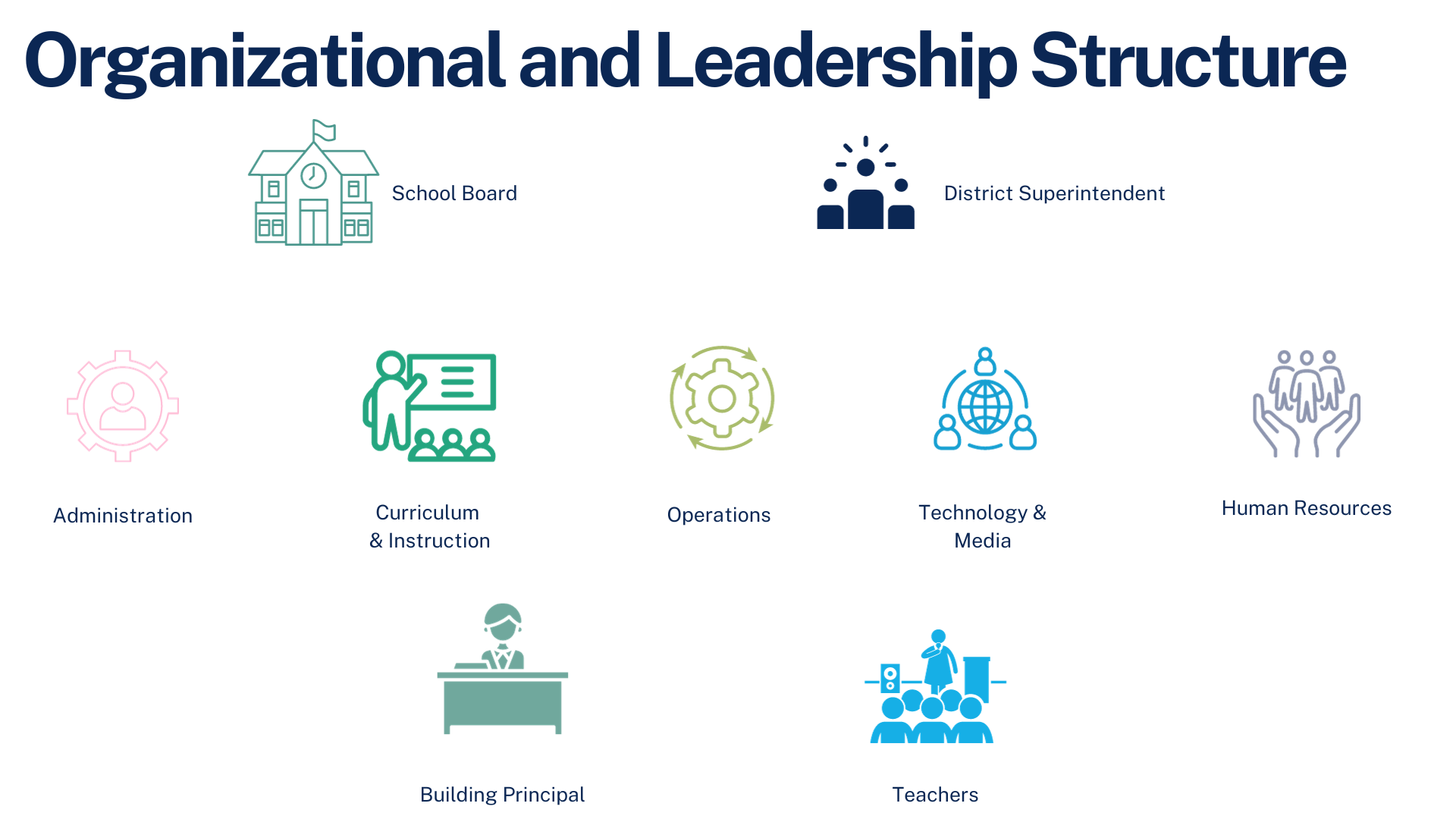
- School Board
- Superintendent
- District Cabinet
- Building Principals
- Teachers and Support Staff
In small districts, a single leader may span multiple roles. In a district with fewer than 5,000 students, you may be selling to a superintendent who also handles technology purchasing. In a district with 50,000 students, the technology director who makes the recommendation may never interact directly with the superintendent.
The Superintendent
Who They Are
Superintendents are the CEOs of their school districts, accountable simultaneously to an elected board, state agencies, parents, media, and community members. Superintendent turnover runs at approximately 20% annually. [1] A 2022 AASA survey found 44% had considered or were planning to leave within 2–3 years. [1] The contact you cultivated this year may not be in their role at renewal.
What They Care About
District-wide outcomes and political sustainability. They ask: Will this help my students? Will principals and teachers use it? Can I defend this purchase to my board? Is this vendor going to be here in five years?
How to Reach Them
Primary association: AASA, The School Superintendents Association (aasa.org). AASA's National Conference on Education in February is the single most important event for superintendent-level access. Private events by ERDI, IEI, and OPAL offer the highest density in structured meeting formats.
The Chief Academic Officer
Who They Are
The CAO, also titled Assistant Superintendent for Instruction or Director of Curriculum, is the intellectual leader of the district. They came up through teaching. They have read the research you're citing before you cited it. They will ask for the efficacy data, and they will read it. CAOs chair or heavily influence curriculum adoption committees.
How to Reach Them
ASCD is the primary association, 90,000+ members [2] and a flagship publication, Educational Leadership, that reaches tens of thousands of practitioners. Content marketing centered on educator outcomes is the most effective ongoing channel.
The Chief Information Officer / Technology Director
What They Care About
Interoperability, security, compliance, and implementation burden. A product that passes the CAO's academic evaluation and fails the CIO's technical review does not get purchased. Technical documentation, security certifications, and integration capabilities must be as polished as your academic pitch.
How to Reach Them
CoSN, the Consortium of School Networking, is the primary association. In 2026, CoSN is particularly active on AI governance frameworks, a topic that has elevated the technology director's role in product evaluation across the district.
The Principal
What They Care About
Practical implementation, not what a product promises to do, but what teachers will actually do with it on a Monday morning. Principals are influential veto players: they will kill a district-wide rollout if teachers are complaining, and champion a product their teachers love.
The Teacher
Who They Are
Teachers are end users, not economic buyers, but the single most important factor in whether a purchased product succeeds or fails. Teacher attrition runs at 30–50% annually. [3] The workforce is approximately 77% female. [4]
What They Care About
Simplicity, curriculum alignment, and time savings. Teacher ambassadors, educators who genuinely love your product and say so publicly, are more effective than any paid marketing channel.
The School Board Member
What They Care About
Fiscal accountability, community perception, and superintendent confidence. Boards are navigating intense pressure around curriculum content, AI policy, and DEI programming. The most effective board-level strategy is to work through the superintendent and cabinet so board members encounter your solution in the context of strong administrative endorsement.
Building Your Message Map
A message map translates your product's core value proposition into language that resonates specifically with each persona's priorities and vocabulary. For each persona, define: the primary challenge you address, the specific outcome you deliver, the proof point that makes that credible, and the call to action appropriate to their role and authority.
Frequently Asked Questions
Who makes the final purchasing decision in a school district?
For most enterprise EdTech purchases, the superintendent has final approval authority, but the recommendation comes from a cabinet-level administrator, the CAO for curriculum solutions, the CIO for technology infrastructure. Large purchases are often presented to the school board. The most important influencer is whichever cabinet member chairs the evaluation committee.
How long does a K-12 EdTech sales cycle typically take?
Enterprise K-12 sales cycles typically run 12 to 24 months from first meaningful contact to signed contract. Factors that shorten the cycle: warm peer referral, competitive RFP with strong alignment, grant funding with a deadline, internal champion.
What do superintendents actually want to hear from EdTech vendors?
Three things, in order: proof that the product works for students like theirs; confidence that principals and teachers will use it; assurance that the vendor will be a reliable partner over time. What they do not want: feature lists, marketing claims without evidence, or pitches that ignore their specific district context.
Resources & Organizations Referenced
AASA, The School Superintendents Association
13,500+ members
ASCD Association for curriculum and instruction leaders
90,000+ members
CoSN, Consortium of School Networking
Primary association for K-12 technology directors.
ISTE, International Society for Technology in Education
A passionate global community dedicated to making teaching and learning more meaningful for educators and learners around the globe.
NAESP/NASSP
Principal associations, elementary and secondary.
Council of the Great City Schools
76 large urban districts representing 7.4 million students.