
Table of Contents
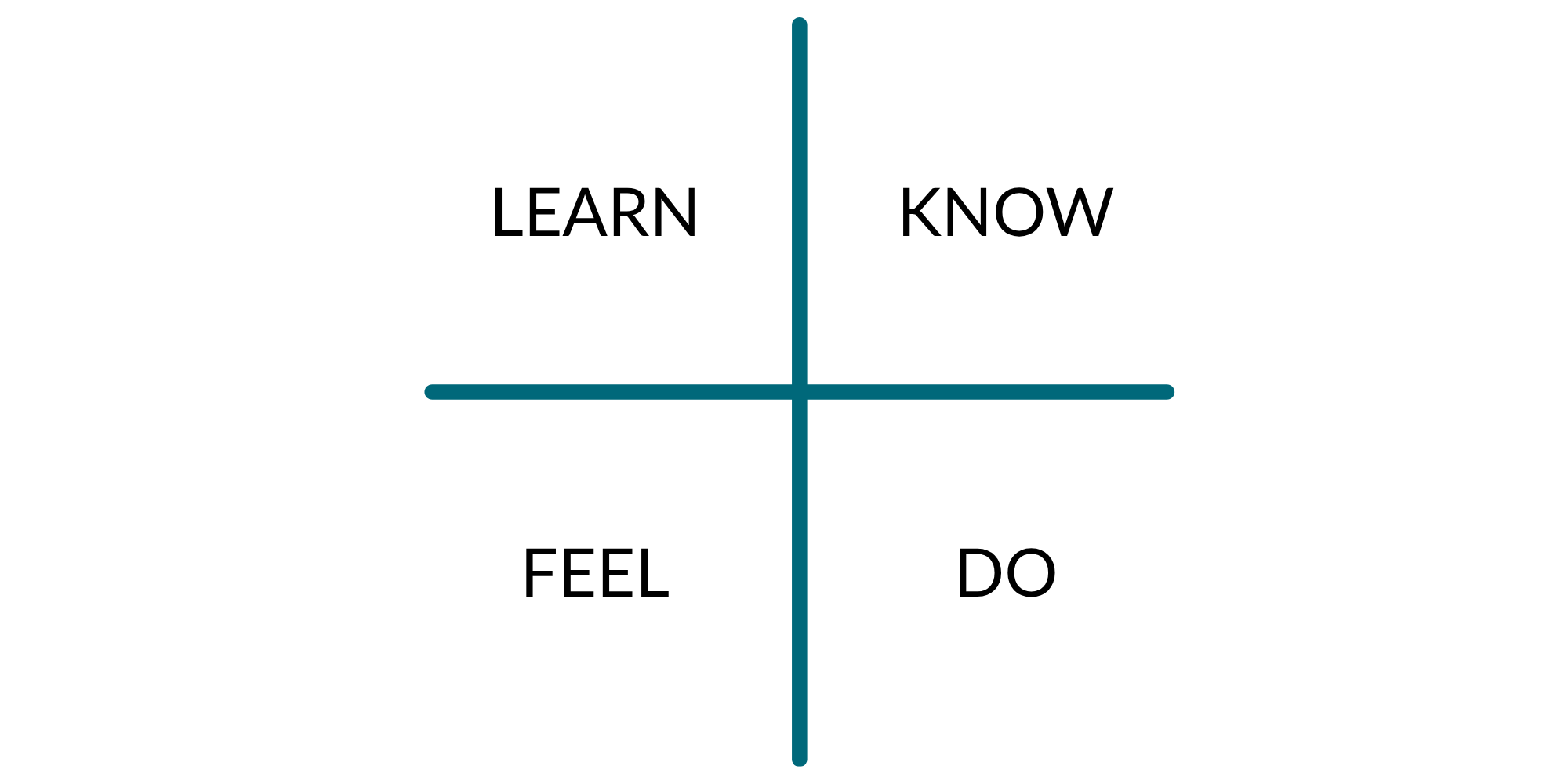
We've spent twenty years training sales and marketing teams to do one thing well at a conference: turn a chance encounter into a qualified conversation. The framework that holds up across every show, every booth size, and every product category is four words.
What the framework asks
Every interaction at a booth, whether it lasts thirty seconds or thirty minutes, should answer four questions.
- What did you learn about them?
- What do they now know about you?
- How do they feel about the interaction?
- What will they do next?
Learn
Most booth conversations skip this entirely. The booth team is so focused on delivering the message that they forget the prospect is also data.
You need to learn about their role, district context, what brought them to the booth, what they're using today, and what they actually came to the conference to solve. Five things, captured in the natural flow of conversation, not in an interrogation.
The booth teams that learn well don't have better questions. They have better silence. They ask one thing and then stop talking long enough for the other person to say more than they intended to.
Know
This is the only quadrant most companies are actually trained on, which is why most booth conversations feel one-sided.
The prospect needs to walk away knowing three things, in this order. Who you are. Who you serve. Why the people you serve choose you over alternatives.
Note the order. Most companies lead with the product, which is a clumsy answer to a question the prospect hasn't asked yet.
Feel
This is the quadrant nobody trains for and everybody pays for.
The four feelings to engineer, in our experience, are these. Confident in their own decisions. Inspired by what they saw. Cared for as a professional. Heard as a human.
A prospect who feels heard will return your follow-up email. A prospect who feels sold to will not.
If your team is loud, your booth is performing instead of connecting. We stood next to booths so frantically energetic that the prospects nearby were physically retreating.
Do
The conversation ends with a specific commitment. Not "we'll be in touch." A specific next step with a mode, a timing, and the right additional people.
Mode means email, call, meeting, or product trial. Timing means a window, not "soon." Additional people means whoever else needs to be in the room to move the conversation forward, named where possible.
A booth team that captures a name and an email has captured a lead. A booth team that captures a name, an email, a clearly agreed next step, and the names of two other people who need to be looped in has captured the start of a deal.
Why this is harder than it sounds
The most common failure mode is racing through the framework. Teams that read this article often go back to their next conference, run the framework like a checklist, and wonder why the conversations feel mechanical.
The framework isn't a checklist. It's a structure that lives underneath a real conversation. Your prospect shouldn't be able to tell you are running it. The training, candidly, is more about presence than process.