
Table of Contents
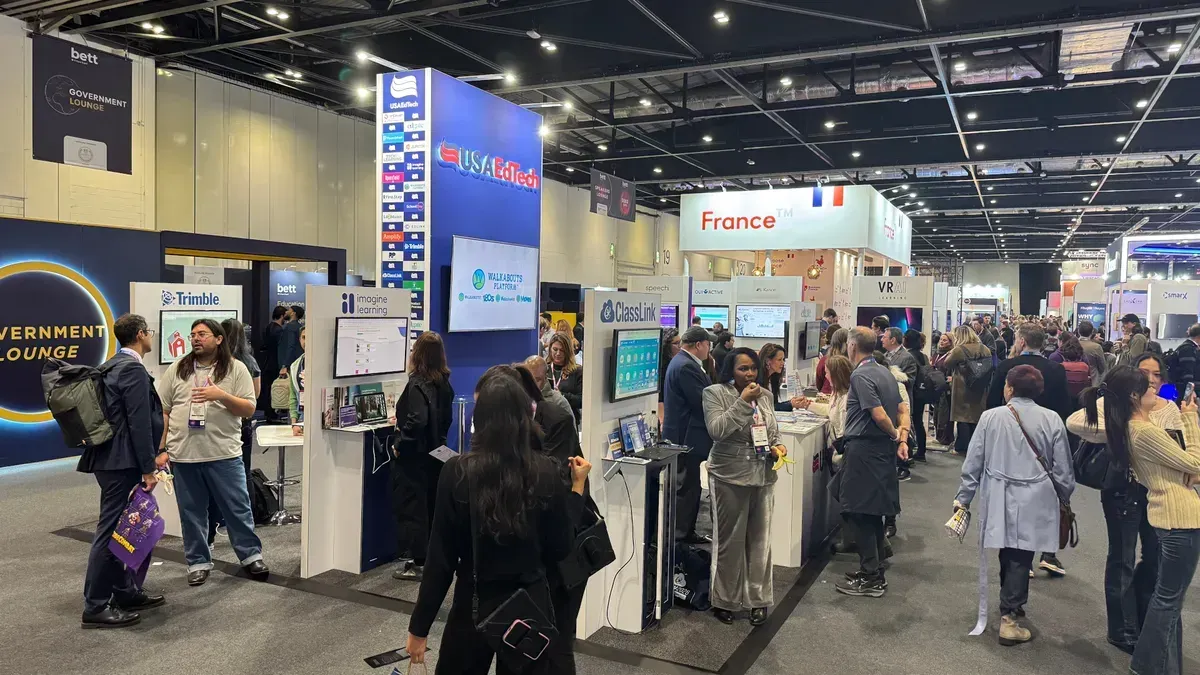
We've helped staff booths at many of the larger trade shows: ISTE, AASA NCE, ASCD, FETC, TCEA, and dozens of state association conferences. We've watched our clients' booths from across the aisle. We've stood at our clients’ booths and listened to attendees say "I'm just a teacher" hundreds of times.
Here's an interesting pattern that emerged.
Every attendee who walks up to your booth is one of four people. They each have a predictable opening line. And once you know which one is standing in front of you, you know exactly where the conversation needs to go.
The 4 people who stop at your booth
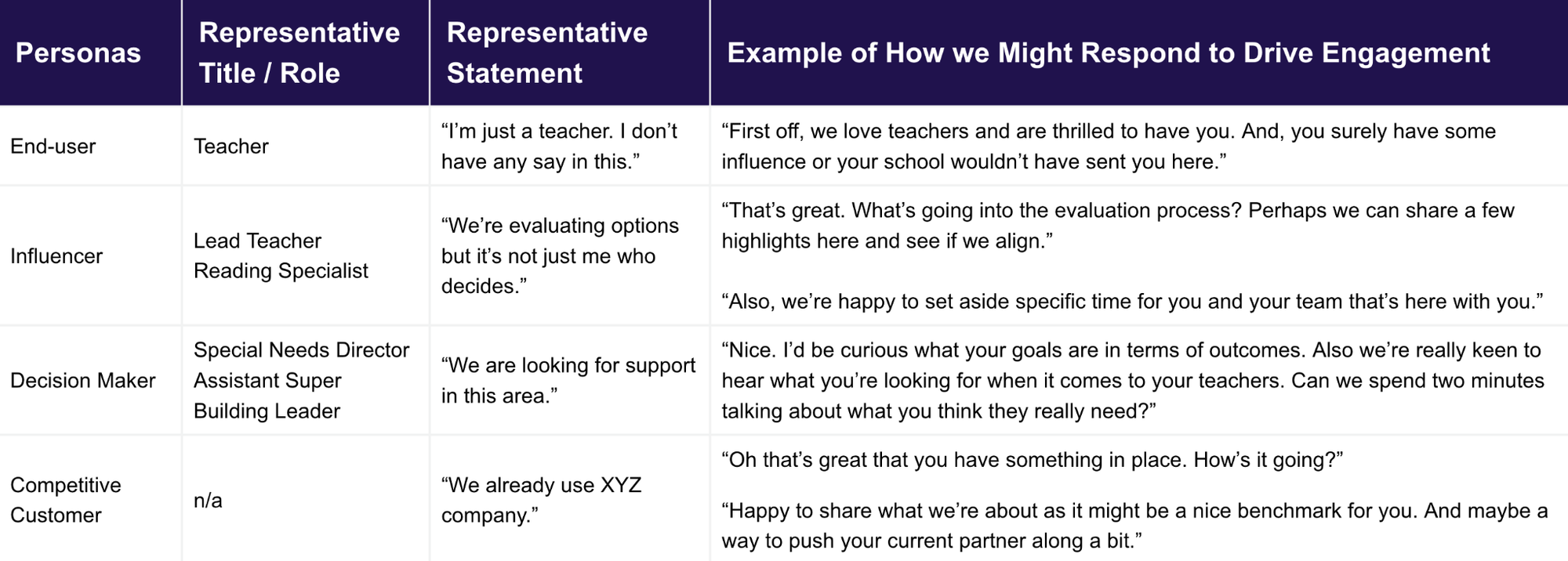
There are end users. Usually teachers. Their opening line is some version of "I'm just here to learn."
There are influencers. Department chairs, instructional coaches, reading specialists, and curriculum directors. Their opening line is some version of "We're evaluating options."
There are decision makers. Assistant superintendents, special needs directors, and building leaders. Their opening line is some version of "We need support in this area."
And there are competitive customers, already using something. Their opening line is some version of "We use XYZ."
That's it.
After two decades of doing this, those are the four scripts that play out, with small variations, at every booth in every hall.
Why this matters more than your demo
Most EdTech companies train their booth teams on the product. Very few train their booth teams on the person.
When an end user says, "I'm just a teacher, I don't have any say in this," the untrained booth response is to politely hand them a one-pager and disengage. The trained response recognizes that this teacher's principal sent them to this conference for a reason, and that reason is a signal worth surfacing.
When an influencer says, "We're evaluating options," the untrained response is to load them up with sales collateral. The trained response asks who else is on the evaluation team and offers to set aside time on site for the whole group.
When a competitive customer says, "We already use XYZ," the untrained response is to launch into why your solution is better. The trained response asks how XYZ is going and listens for the gap.
What to listen for in the first 10 seconds
Each persona signals itself quickly. Job title is a strong proxy. Body language is a stronger one. The dead giveaway is the first question they ask.
The skill is not memorizing scripts. The skill is recognizing which script the other person is running.
3 Things to do for the next show
First, before the show, have your booth team write down the four personas and one sample opening line each will hear. Make them say the lines out loud. The team that can't recognize a competitive customer's setup won't handle it well at the booth.
Second, assign a routing protocol. End users go to one teammate. Decision makers to another. Lead capture is everyone's job. The handoff is not.
Third, debrief by persona at the end of each day. Not "how many leads." How many decision makers? How many competitive customers? Those numbers tell you who actually showed up and whether your booth was set up to receive them.
The companies that win conferences are not the ones with the biggest booths. They are the ones who recognize, in the first 10 seconds, who is standing in front of them, and then take the right next step.