
Table of Contents
This article is sponsored by the producers of Navigate EdTech and organizers of USA EdTech, a hub for U.S. participation in global edtech events.
Most EdTech companies that consider international expansion make the same first move: they buy a booth at a major overseas conference, send two people, and see what happens. Sometimes it works, but all too often companies come home with interesting new chocolate, some magnets, and not much else. Showing up without context, relationships, or market intelligence is expensive guesswork, while the companies that expand successfully treat global conferences not as the strategy itself, but as a concentrated deployment point within a longer term plan.
The first step? Find a partner
Expanding into international markets without local knowledge is one of the more avoidable ways to waste a year and a significant budget. The education procurement landscape varies dramatically by country: purchasing structures, curriculum frameworks, ministry relationships, and the unwritten rules of how decisions actually get made are not things you can reverse engineer from a conference visit. Firms like EdBD Group and EDT& Partners exist precisely to close that gap. They bring established relationships, regional market intelligence, and the kind of on the ground credibility that takes years to build independently. For companies serious about international expansion, engaging a partner early, before the first conference, before the first hire, shortens the learning curve and reduces the cost of mistakes that experienced operators have already made on someone else's dime.
A newer category of platforms are also emerging that take a different approach, using technology to open up international distribution channels rather than relying solely on traditional advisory relationships. Spyro Global and Ednology are two interesting examples, each building infrastructure designed to connect EdTech solutions with international buyers and markets in more scalable ways. These platforms are at an earlier stage, but the model is compelling for companies that want to explore international channels without committing immediately to the full overhead of a regional expansion. The right answer for most companies is probably some combination: a partner who knows the market and can open the right doors, and platforms that extend reach in ways a small team cannot replicate manually.
Global Conferences Deserve a Place in Your Expansion Strategy
International EdTech events like Bett UK, EDUTech Asia, and EDUTech Australia concentrate the right people in one place at a scale that would otherwise take years to replicate through outbound efforts alone. Ministries of education, school group leaders, boards of education, and procurement decision makers from across entire regions attend these events specifically to evaluate solutions. The access is real and it is compressed into a few days.
But access without credibility is just foot traffic. The companies that convert conference presence into actual pipeline are the ones that arrive with some understanding of the market they are entering, the buyers they are meeting, and the competitive landscape they are walking into. Global conferences accelerate relationships that already have some foundation. They are harder to leverage as a cold start.
The Case for Going as Part of a Delegation
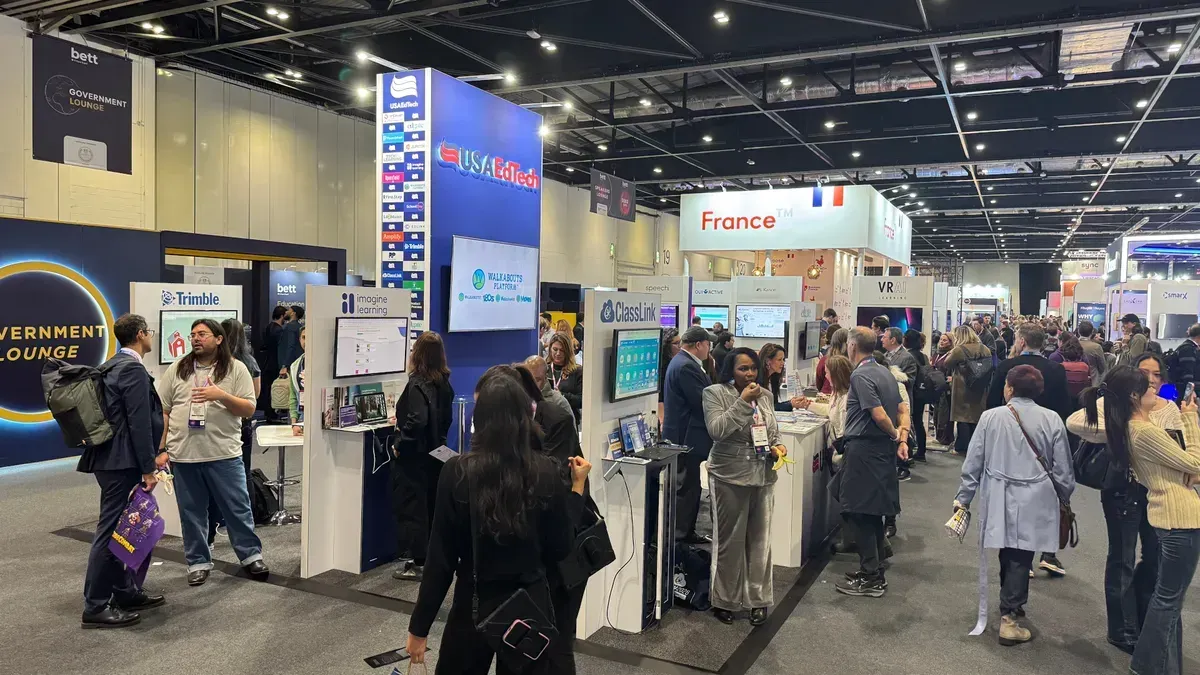
There is a meaningful difference between attending a global conference independently and attending as part of an organized delegation. USA EdTech has built a model specifically around this distinction. Their delegations to events like Bett UK place U.S. companies inside a shared pavilion with a recognized collective brand, pre-scheduled meetings, dedicated exhibit stations, and a support structure that handles logistics so the team can focus on conversations.
The value compounds in a few specific ways. First, the collective brand matters in markets where your company name is unknown. Arriving as part of a U.S. EdTech delegation signals legitimacy and gives international buyers a familiar frame of reference. Second, the pre-event marketing and meeting scheduling that organized delegations provide means you are not arriving cold. You have conversations already on the calendar before you land. Third, the peer network inside the delegation itself has proven value. Companies that have traveled together tend to share leads, make introductions, and support each other in ways that solo attendance never produces.
What to Do Before You Go
A conference delegation is an amplifier, so it should not be considered the starting point. The companies that get the most from international events are the ones that arrive with a market thesis already formed. Which countries are you prioritizing and why? What do you know about how purchasing decisions are made in those markets? Do you have any existing relationships, however early, that the conference can deepen?
If the answer to all of those questions is "we are figuring that out at the conference," then you'll risk spending too much time learning things you could have learned before you left. Do the research first so that the event is where you can act on it.
The Practical Question
International expansion is a long game. Companies have to consider their capacity to invest in getting solutions ready, meeting compliance requirements, learning the nuances, finding partners, and building a fulsome plan. Global EdTech events are a great way to start since they place you in the room with the right people at a moment when those people are actively looking.
So the question is not simply whether or not to go global, it's about whether you are ready to make the most of it when you get there.

Explore new markets as part of a delegation, making international growth easier, more affordable, and far more effective.