Table of Contents
The difference between a booth that generates conversations and one that prevents them is about your brand, it's about your posture.
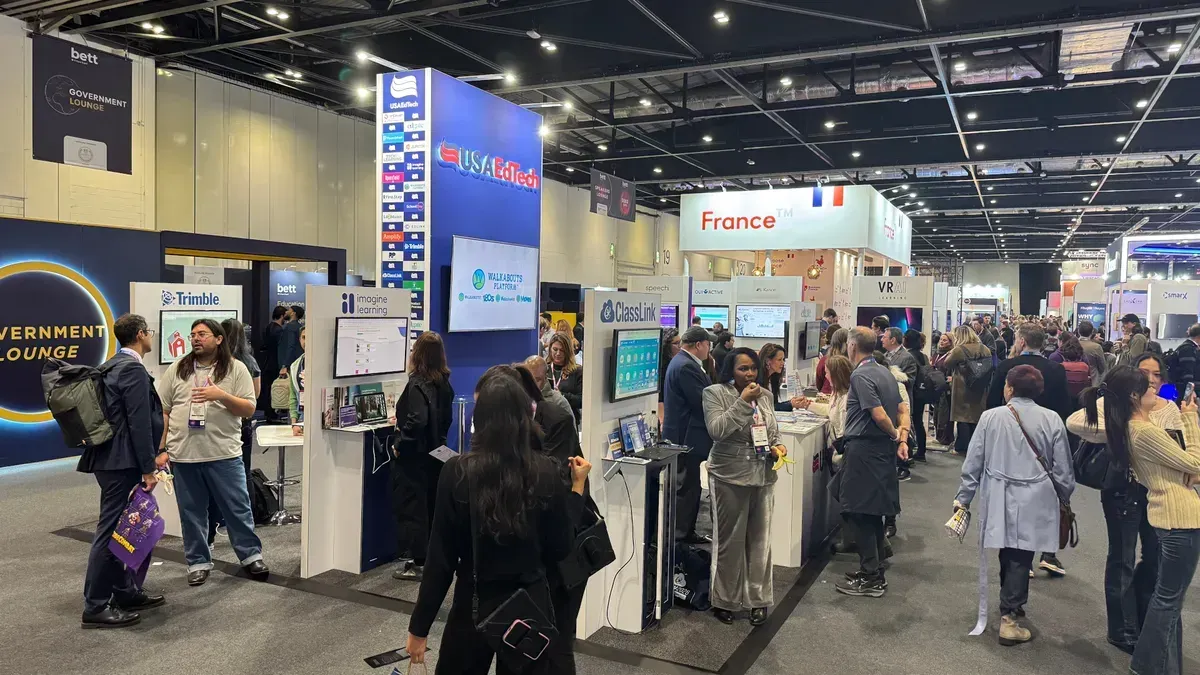
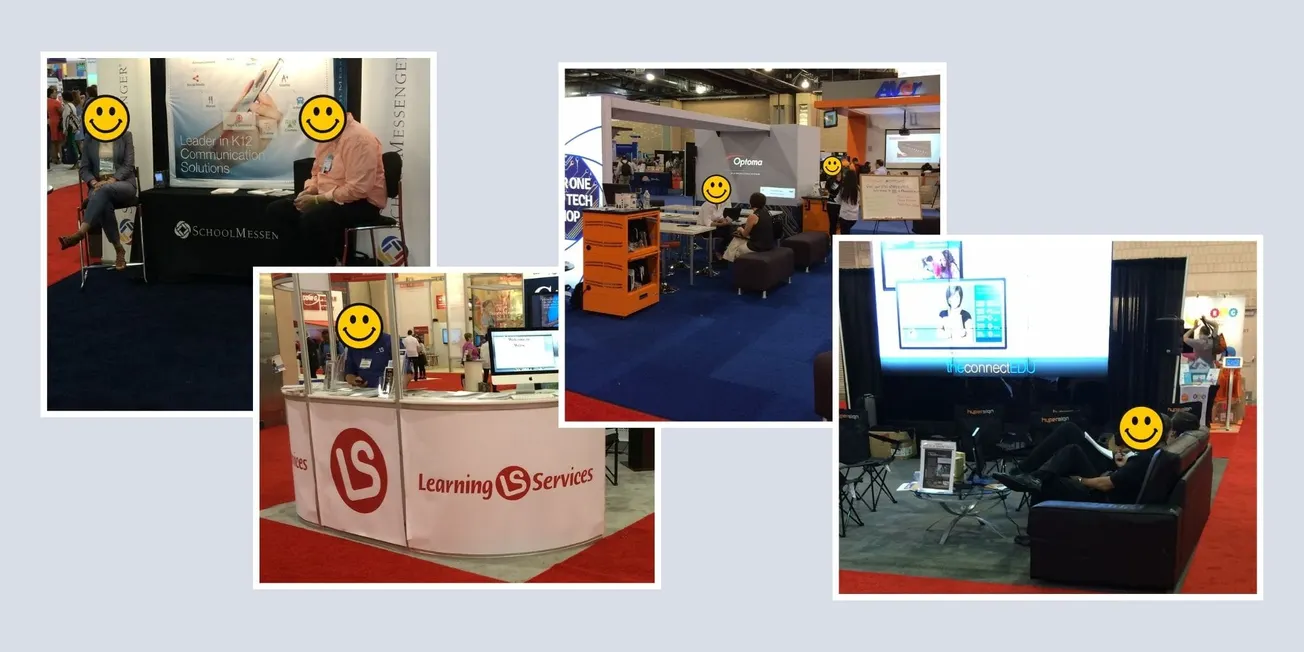
I have walked a lot of conference exhibit halls over the past twenty five years. The booths that pull people in and the booths that repel them are usually separated by one thing: the staff. It doesn't matter how beautiful the design, or how bright the lights. What matters is whether staff members are accessible and ready to engage. Far to often, I see booth staff hiding behind a counter, looking at their phones, or sitting down. It really is as simple as standing up and looking up.
And yet, at every single major EdTech conference, a significant percentage of exhibit booths have exactly this problem. Staff sitting on stools, scrolling, glancing up when someone happens to slow down. It communicates, loudly and without words, that the people inside would rather be somewhere else.
Nobody stops at these booths. And then the company spends the drive home wondering why the conference did not produce results.
What actually draws people in
Your team stands at the aisle edge of the booth, not inside it and not behind furniture. They make eye contact. They have a one-sentence opener that is a question, not a pitch. Something like: 'What brings you to the conference this year?' or 'Which sessions have been most useful so far?' Questions that invite a real answer instead of a polite dodge.
The physical setup matters too. An open booth without a table barrier is more inviting than one where visitors feel like they are approaching a reception desk. If you need a table for materials or a demo screen, put it to the side or at the back, not across the entrance like a checkpoint.
Demonstrations should be running or ready to run immediately. A district leader who stops and expresses interest has about 90 seconds of attention before the conference floor pulls them somewhere else. Do not spend that window logging into a system or finding the right slide.
Staff on their phones. It signals disengagement to every person walking past and costs you conversations you will never know you missed. Build a simple rule before every conference: phones stay in pockets while on the floor. No exceptions.
On staffing honestly
The staffing formula we use is to divide expected attendance by 1,000 to get appropriate headcount. A 4,000-person conference warrants four people. Most companies bring two. That math means each person is covering twice the conversational load the event actually requires, burning out by day two, and missing connections they would have made with adequate coverage.
Never staff a booth alone. One person cannot cover the floor, take a break, and maintain energy across a full conference day. Minimum two for any exhibiting presence, minimum three if you are running live product demonstrations. And the people you send matter as much as how many you send. Your best relationship builders belong on the floor, not in sessions.
The pre-conference work most companies skip
The conversations that turn into pipeline at conferences rarely start on the conference floor. They start with outreach two to three weeks before the event. Look at who is attending, who is speaking, and who in your existing network will be there. Reach out before you leave. Schedule meetings before the badge scanners open.
Showing up with ten meetings already on the calendar is a fundamentally different conference experience than showing up and hoping to meet the right people. The right people have full schedules too. Get on them early.